


Hair loss for men
Hair loss is a problem that affects many men in particular. 80% of men suffer from genetic hair loss. When receding hairlines occur, attempts are first made to stimulate hair growth with various tinctures, suitable shampoos and nutritional supplements. However, these remedies do not reduce hair loss and the beard, which is important to many men, loses its appeal. This also has disadvantages in professional life, as a man without hair looks older. Having to do without a feature that one has been accustomed to all his life leads to lowered self-confidence. The feeling of insufficiency leads to withdrawal in personal success and social life. If you think that a toupee is the solution for you, you are mistaken. During sports activities, a toupee would prevent you from doing them.
What would be an effective solution? A permanent remedy can only be provided by a professional hair transplant. A professional hair transplant is necessary to permanently eliminate the problem.
Different forms of hair loss
Hereditary hair loss – androgenetic alopecia
2/3 of men and 50% of women suffer from hereditary hair loss. The roots of the hair on the head, which are hypersensitive to androgens, shrink and it is no longer possible to grow healthy, strong hair. At first, the hair thins out around the temples. The hairline recedes more and more until it eventually becomes completely bald. The faster the onset of genetic hair loss in men, the faster and
more severe the process.
Circular hair loss – alopecia areata
The immune system reacts incorrectly and attacks the body’s own tissue. In some cases, the entire body hair can be affected. Areas affected by circular hair loss can heal spontaneously and the hair grows back. This type of hair loss occurs when the immune system reacts incorrectly and attacks the body’s own tissue. In some cases, the situation affects the entire body hair. With this type of hair loss, the affected areas can heal and the hair grows back.
Diffuse hair loss
Various causes such as stress, iron deficiency, thyroid dysfunction or
other illnesses can lead to hair loss. The
hair on the entire head area thins and loses its density.
Focal hair loss with scarring
Scars form as a result of injuries or inflammation. The hair roots in this area are permanently damaged and no new hair grows back. In this case, inflammation or injury leads to scars, and as the hair roots in this area are permanently damaged, new hair does not grow back.
The course of hair loss in men
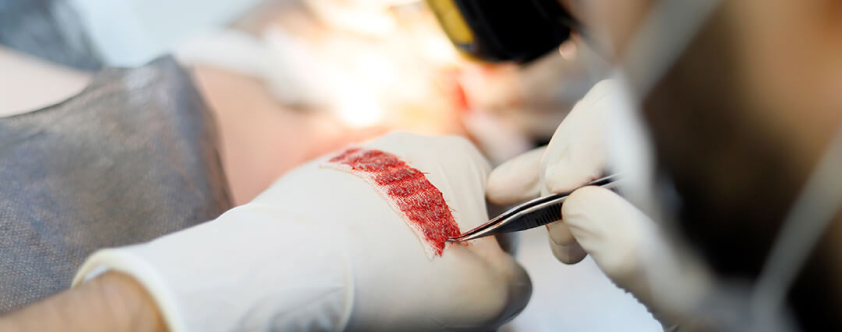
The Hamilton scale shows the progression of hair loss in men. Hair loss, the cause of which is genetic, begins in the twenties. First, receding hairlines form on the temples (stage 1). In the following years, hair loss occurs at the top of the back of the head and as a result a tonsure develops (stage 2). Finally, the hair-free areas merge, resulting in baldness (stage 3). Residual hair only remains in a horseshoe shape as a ring of hair at the back of the head. The remaining hair is horseshoe-shaped and remains as a crown of hair at the back of the head.

Therapy for hair loss in men
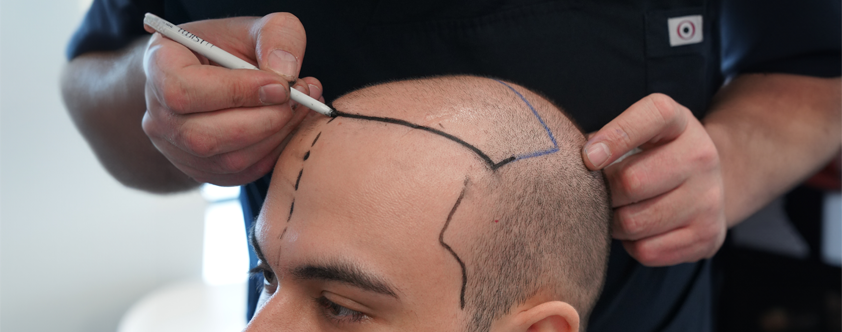
As the concentration of the male sex hormone testosterone cannot be changed without side effects, attempts are made to stimulate the hair roots with autologous blood injections and increase their vitality. No scientific evidence has been obtained regarding the success of this therapy. When hair tinctures, caffeine or medicinal herbs are used, there is a low probability of achieving the desired result.proven efficacy Minoxidil, a drug used for the treatment of high blood pressure, has proven efficacy. The active ingredient, which is contained in solutions and foam, is applied directly to the scalp and massaged in. By applying the active ingredient minoxidil locally twice a day, the hair fluff begins to thicken. If the rubs are started early, diffuse hair loss slows down. There are no side effects, such as increased formation of unwanted hair on other parts of the body. Blood pressure is not significantly affected by local application. The active ingredient finasteride is an alternative to the active ingredient finasteride. A growth of 17 additional hairs per square centimeter was confirmed with long-term use. Finasteride inhibits the conversion of testosterone, the hair roots are not damaged as severely. Dihydrotestosterone does not damage the hair roots as much, as finasteride only inhibits the conversion of testosterone. In order to reduce the possible side effects, treatment with medication should be carried out under medical supervision. Diffuse, hereditary hair loss can also be treated with a diode laser. Blood flow to the hair roots is stimulated by irradiation with infrared laser light and the supply of nutrients and energy is improved. The irradiation, which is initially carried out twice a week, activates the growth of stronger and healthier hair and is later carried out every 2 weeks and generally over 12 months. A fractional laser can be used for circular hair loss. The hair roots are stimulated by micro-injuries deep in the scalp to produce new hair. This increases hair density and improves hair fullness. There is a holistic concept for the treatment of hair loss. Important aspects for the treatment of hair loss depend on a restoration of the acid-alkaline balance and an improved supply of minerals and trace elements to the body via micronutrients. The body is cleansed of unwanted substances and the self-healing powers are mobilized. Alkaline natural shampoo helps to break down acids on the scalp. It also supplies the scalp with vital substances. The effect of this alternative method has not been scientifically proven.
Final solution for hair loss in men
Free hair analysis
Click on the button and get your individual treatment price in only 2 minutes!
Hair loss in women
Unwanted hair loss is not just a problem for men. Women also suffer from this problem. Although there are no pronounced receding hairlines like in men, the hair around the head becomes thinner and the hairline slips backwards. A high hairline is usually present from birth. This beauty problem in women often causes feelings of inferiority. They may withdraw from their circle of friends, which can lead to depression. A hair transplant at Bank of Hair can eliminate this problem.
Hair transplant for women
Women are less frequently affected by hormonal, constitutional hair loss, also known as androgenetic alopecia, than men. The dihydrotestosterone hormone only plays a subordinate role in women. Reduced aromatase activity leads to low levels of oestrogens. This causes hair loss to slowly spread from the middle parting towards the forehead and the hairline. It rarely results in complete baldness. Diffuse hair loss is associated with the formation of a high forehead. Circular hair loss is mostly caused by autoimmune diseases or metabolic disorders, such as diabetes or thyroid dysfunction, and stress. The immune system’s defense cells prevent new hair follicles from growing. Circular bald patches become visible all over the head. Scarring and injuries can also be the cause of hair loss. There may also be other causes such as Deficiency symptoms due to an unbalanced diet, metabolic disorders, hormonal fluctuations, intolerance to medication, stress.
When can hair transplantation be performed in women?
If there is a 50% hair loss and the hair is becoming less and less, you are suitable for a hair transplant. Your self-confidence will be severely affected. As long as there is enough hair on other parts of the head for a hair transplant in women, the procedure can be carried out. Before the operation, the doctor must be informed of any concomitant illnesses and medication taken.
What should be considered after a hair transplant for women?
If hair transplantation is performed using the Fue (Follicular Unit Extraction) method, the patient can return to their everyday life after 2 days. Thanks to this method, there is no extensive bleeding or swelling. The punctiform scars heal quickly and are no longer visible after a short time. After a few days, you can return to sports. You will need to keep your hair moisturized with a nourishing spray for the first few weeks. After three weeks, it is possible to wash the transplanted hair with a special shampoo. After 12 months, the final result is achieved and you will have your desired, natural-looking and thick hair. The hair transplanted by Bank of Hair remains permanently. Your hair loss problem is solved for good.
Stay up to date
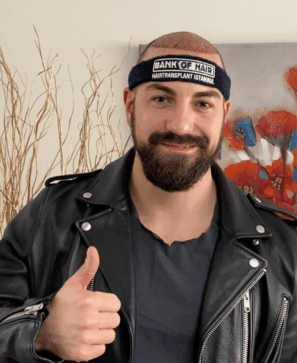
The question of the best time for a hair transplant concerns many people who suffer from hair loss or thinning hair. With the right information and timing, you can not only improve the appearance of your hair, but also increase your self-esteem and quality of life. In
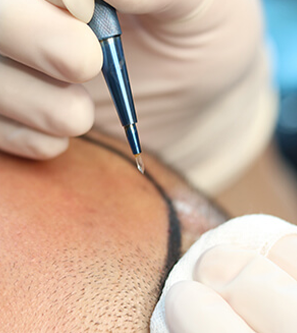
The question of the best time for a hair transplant concerns many people who suffer from hair loss or thinning hair. With the right information and timing, you can not only improve the appearance of your hair, but also increase your self-esteem and quality of life. In
The question of the best time for a hair transplant concerns many people who suffer from hair loss or thinning hair. With the right information and timing, you can not only improve the appearance of your hair, but also increase your self-esteem and quality of life. In
The question of the best time for a hair transplant concerns many people who suffer from hair loss or thinning hair. With the right information and timing, you can not only improve the appearance of your hair, but also increase your self-esteem and quality of life. In
Free hair analysis
Click on the button and get your individual treatment price in only 2 minutes!