


Hair loss – the ultimate overview of alopecia
Hair loss is the condition in which hair on the head or other parts of the body falls out or becomes thinner. This phenomenon can occur in people of all ages and genders, although the likelihood increases with age.
Hair loss can be localized or diffuse, i.e. concentrated in certain areas or spread over a larger area. It is quite normal to lose a few hairs every day.
The problem begins when the loss becomes significant and causes visible bald patches. Hair loss can be emotionally distressing and affect self-confidence.
The causes of hair loss can be manifold:
- genetic factors
- Hormonal changes
- Stress
- Diseases
It is therefore important to know the exact cause in order to find a suitable treatment method. In this article, you will find all the important information about hair loss. We will also show you how you can actively counteract it with a hair transplant.

The different types of hair loss
There are several types of hair loss, which have different causes, symptoms and treatment options. It is important to understand the exact type of hair loss in order to find the right form of treatment. Below you will find a table summarizing the most common types of hair loss.
| Type | Cause | Symptoms | Treatment |
| Genetics, hormones | Autoimmune disease | Stress, nutrition, illness | Stress, operations, medication |
| Thinning of the hair, receding hairline | Sudden, round bald patches | Uniform hair loss | Temporary, rapid hair loss |
| Medication, hair transplantation | Corticosteroids | Treatment of the cause | Time, treatment of the cause |
Androgenetic alopecia: the most common type of hair loss
Androgenetic alopecia is the most common form of hair loss. Although it is more common in men, hair loss in women is not uncommon either. In men, this condition is often referred to as “male pattern baldness”. It usually begins with the receding hairline and the formation of receding hairlines.
Over time, hair loss can progress and lead to complete baldness. In women, the pattern of hair loss is different. There is usually a general thinning of the hair. This occurs mainly in the crown area, without the hairline receding.
The main causes of androgenetic alopecia are genetic factors and hormones. The hormone dihydrotestosterone (DHT) in particular plays an important role. It shortens the growth phase of the hair and causes the hair follicles to shrink. This in turn results in thinner and shorter hair.
Various options are available for treatment. Medications such as finasteride and minoxidil can slow down the progression of hair loss. In some cases, they even allow lost hair to grow back.
A more permanent, but also more expensive solution is hair transplantation. In this procedure, the hair follicles are removed from densely hairy areas of the head and inserted into the bald patches. However, treatment should always be carried out in consultation with a specialist. As a result, the best solution strategy can be found for the individual case.
Alopecia Areata: A look at autoimmune-induced hair loss
Alopecia Areata is an autoimmune disease in which the body attacks its own hair follicles. This leads to circular hair loss (often round, bald patches on the head or other areas of the body).
This form of hair loss can occur at any age, but is more common in younger people. Androgenetic alopecia is often caused by genes and hormones, while alopecia areata is caused by the immune system.
This type of hair loss can occur very suddenly and can be very emotionally stressful for those affected. D he treatment of alopecia areata often involves the use of topical corticosteroids or injections. This suppresses the immune response and stimulates hair growth.
In more severe cases, oral medication or light therapy can also be used. As this is an autoimmune disease, there is no guarantee of a complete cure. It is therefore essential to consult a specialist for an accurate diagnosis and treatment planning.
Diffuse hair loss: when hair disappears evenly
Diffuse hair loss, also known as diffuse alopecia, is a form of hair loss. In this case, the hair is thinned out evenly over the entire scalp. In contrast to hereditary hair loss, hair falls out all over the head in diffuse hair loss.
The causes can be varied, including stress, hormonal fluctuations, malnutrition, medication or certain illnesses such as thyroid problems or iron deficiency. One of the biggest challenges in treating diffuse hair loss is identifying the exact cause.
This often requires a thorough medical examination, including blood tests and possibly a biopsy of the scalp. Once the cause has been identified, targeted treatment can be initiated.
This can range from taking medication to changing your lifestyle or diet. In some cases, hair loss can also stop on its own once the triggering cause has been eliminated. It is therefore crucial to consult a specialist if there are signs of diffuse hair loss.
Telogen effluvium: Temporary hair loss due to shock conditions
Telogen effluvium is a form of temporary hair loss. It is caused by an imbalance in the natural life cycle of the hair. Normally, each hair goes through different phases, including a growth phase, a resting phase and a shedding phase.
In telogen effluvium, many hairs fall out at the same time because they go into the resting phase. The result is a sudden but often temporary hair loss that can extend over the entire scalp. There can be many reasons for this condition:
- severe stress
- surgical interventions
- Medication
- Rapid weight loss
- Hormonal changes such as those following childbirth
In most cases, the hair cycle returns to normal within a few months and the hair starts to grow again. However, a precise diagnosis and consultation with a specialist is essential. In this way, other possible causes of hair loss can be ruled out.
Sometimes nutritional measures or the adjustment of medication can also help to improve the condition. In most cases, telogen effluvium returns to normal once the cause has been corrected.
Causes of hair loss: An in-depth understanding
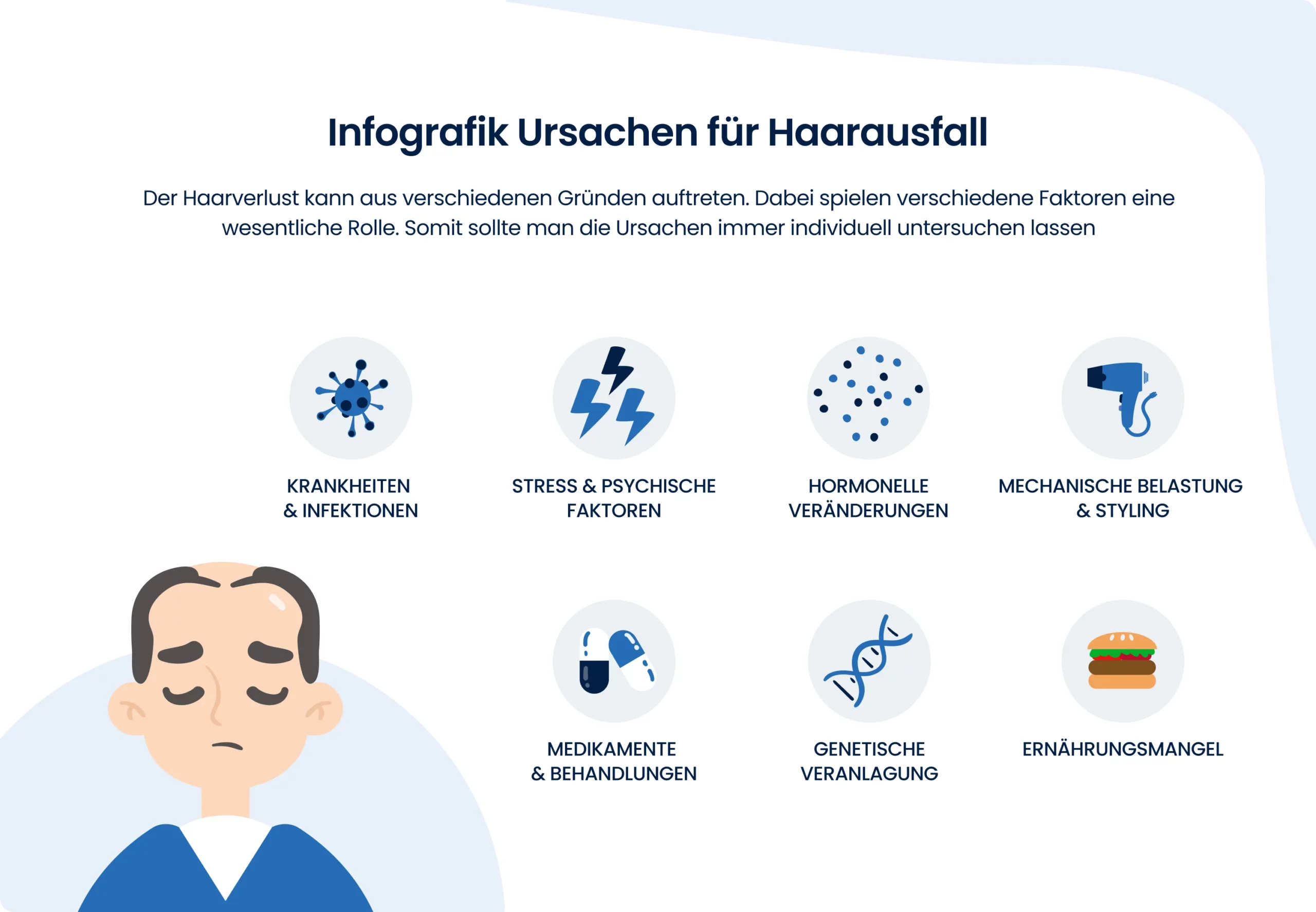
It is important to know that hair loss is not just a cosmetic problem. It can also be an indicator of various health conditions. If your hair is falling out, the causes can be varied, from genetic factors to stress.
Genetic predisposition: The role of genes in hair loss
Genetic factors play a decisive role in androgenetic alopecia in particular. If hair loss is common in your family, you are more likely to be affected. Genes influence how sensitive your hair follicles are to hormones such as dihydrotestosterone (DHT), which can lead to hair loss.
Hormonal changes: A natural trigger for hair loss
Hormonal fluctuations can have a significant impact on hair growth. Women in particular experience hair loss during pregnancy, menopause or hormonal imbalances such as polycystic ovary syndrome. These changes affect the hair cycle and can cause temporary or permanent hair loss.
Stress and psychological factors: the invisible enemy of full hair
Stress is a common trigger for temporary hair loss, known as telogen effluvium. Psychological pressure and prolonged stress can disrupt the natural balance of the hair growth cycle. This can cause more hair to fall out than usual. The good news is that the condition often improves as soon as the stress subsides.
Medication and treatments: Side effects that promote hair loss
Various medications and medical treatments such as chemotherapy can have hair loss as a side effect. Some blood pressure medications, antidepressants and hormonal contraceptives can also affect the hair cycle. It is important to talk to your doctor about such side effects and consider alternative treatments if necessary.
Nutritional deficiency: when the body doesn’t get what it needs
A lack of important nutrients such as iron, zinc or vitamins can have a negative impact on the hair growth cycle. This leads to hair loss. An unbalanced diet or strict diets can aggravate this condition. A balanced diet is therefore crucial for the health of your hair.
Hair loss due to diseases and infections: Health problems that affect the hair
Certain diseases such as thyroid disorders or autoimmune diseases can cause hair loss. Infections of the scalp such as fungal diseases can also lead to temporary hair loss. In such cases, early diagnosis and treatment is important to prevent permanent hair loss.
Mechanical load and styling
Tight braids, frequent straightening or chemical coloring can damage the hair structure and lead to hair loss. These types of mechanical stress pull at the hair roots and, in the worst case, can contribute to permanent hair loss. Gentle styling and care can help to minimize the risk.
Treatment options: From medication to hair transplants
If you are confronted with hair loss, there are various therapeutic approaches that can help.
✅ MedicationPrescription and over-the-counter options such as minoxidil or finasteride can slow down hair loss. These medications work by affecting the hair cycle and promoting hair follicle growth.
✅ Natural remediesFor those who prefer a less aggressive treatment, there are natural remedies. Some people swear by oils such as pumpkin seed oil or rosemary oil to combat hair loss.
✅ Hair transplantationHair transplantation offers an effective solution for lasting results. In this procedure, hair follicles are harvested from a more densely overgrown area and transplanted into the balding areas. Bank of Hair specializes in this method and offers state-of-the-art techniques for excellent results
Hair transplantation in detail: the path to a full head of hair
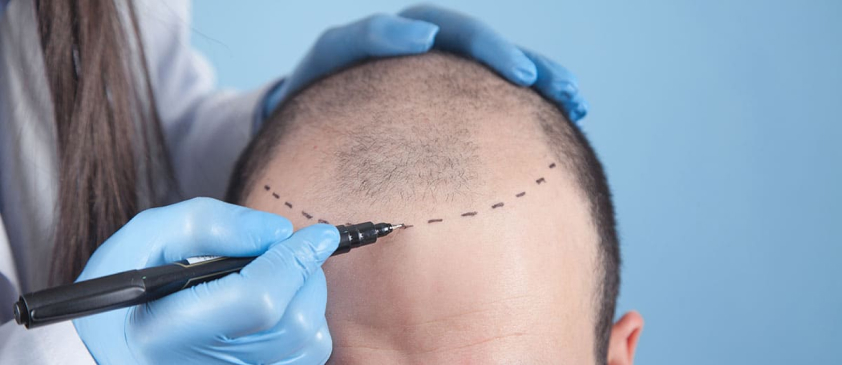
The hair transplantation is an effective method of obtaining permanently fuller and more natural hair. In this surgical procedure, hair follicles are removed from densely overgrown areas of the head or body. They are then inserted into the balding or thinning areas.
There are various techniques such as FUE (Follicular Unit Extraction) or FUT (Follicular Unit Transplantation). The choice depends on various factors such as hair type and extent of hair loss. The procedure is usually performed under local anesthesia. It can take several hours, depending on the number of follicles to be transplanted.
Bank of Hair offers comprehensive advice and state-of-the-art technology in this area. This ensures that the best results are achieved. Talk to one of our experts to find out which method is best for you.
Advantages of a hair transplant: Why this method is convincing
Hair transplants offer a number of benefits that make them an attractive option for people with hair loss:
✓ Long-term solutionUnlike many other treatments, a hair transplant offers a permanent solution to hair loss. The transplanted hair follicles are resistant to the hormone that causes hair loss and therefore remain in place for the long term.
✓ Natural looking resultsThe modern techniques of hair transplantation enable a very authentic result. The hair grows in the natural direction of growth, which ensures an inconspicuous appearance.
✓ High success rate: Hair transplants generally have a high success rate, especially when performed by qualified professionals. Bank of Hair offers first-class procedures with excellent chances of success.
Risks and side effects: What you should be aware of
Like any surgical method, hair transplantation also involves certain risks and side effects. These depend on the technique used and can vary.
Risk of infection: Every surgical procedure carries a certain risk of infection. It is important to follow aftercare instructions carefully. Scarring: Visible scarring can occur, particularly with the FUT method. However, modern techniques such as FUE minimize this risk. Uneven growth: In rare cases, the transplanted hair may grow unevenly, which may require further treatments. Short-term hair loss: Immediately after the transplant, there may be a temporary loss of the transplanted hair. They then start to grow again.
It is therefore essential to choose an experienced provider such as Bank of Hair. As a result, risks and side effects can be minimized.

Hair transplant techniques compared: find the best method for you
There are different techniques for hair transplants, each with their own advantages and disadvantages.
The choice of the right method depends on various factors. The type of hair loss, the quality of the donor hair and personal preferences all play a role.
Bank of Hair offers a variety of techniques. This means that the right solution can be found for every patient. Below you will find a comprehensive table that provides an overview of the most common techniques.
| Method | Advantages | Disadvantages | Suitable for |
| FUE hair transplant | ✅ Minimal scarring, fast healing | Low to moderate hair loss | |
| Sapphire hair transplant | ✅ High-precision incisions, natural results | Moderate to severe hair loss | |
| DHI method hair transplantation | ✅ No pre-shaving necessary, precise placement | Low to moderate hair loss | |
| SDHI hair transplantation | ✅ Combines advantages of DHI and sapphire, high precision | ❌ Very high costs | Moderate to severe hair loss |
| Percutaneous hair transplantation | ✅ Natural-looking results, less trauma for the skin | Low to moderate hair loss | |
| FUT hair transplantation | ✅ Enables many grafts to be removed in one session, cost-effective | ❌ Visible scars, longer recovery time | Severe hair loss |
Costs of a hair transplant: what you can expect financially
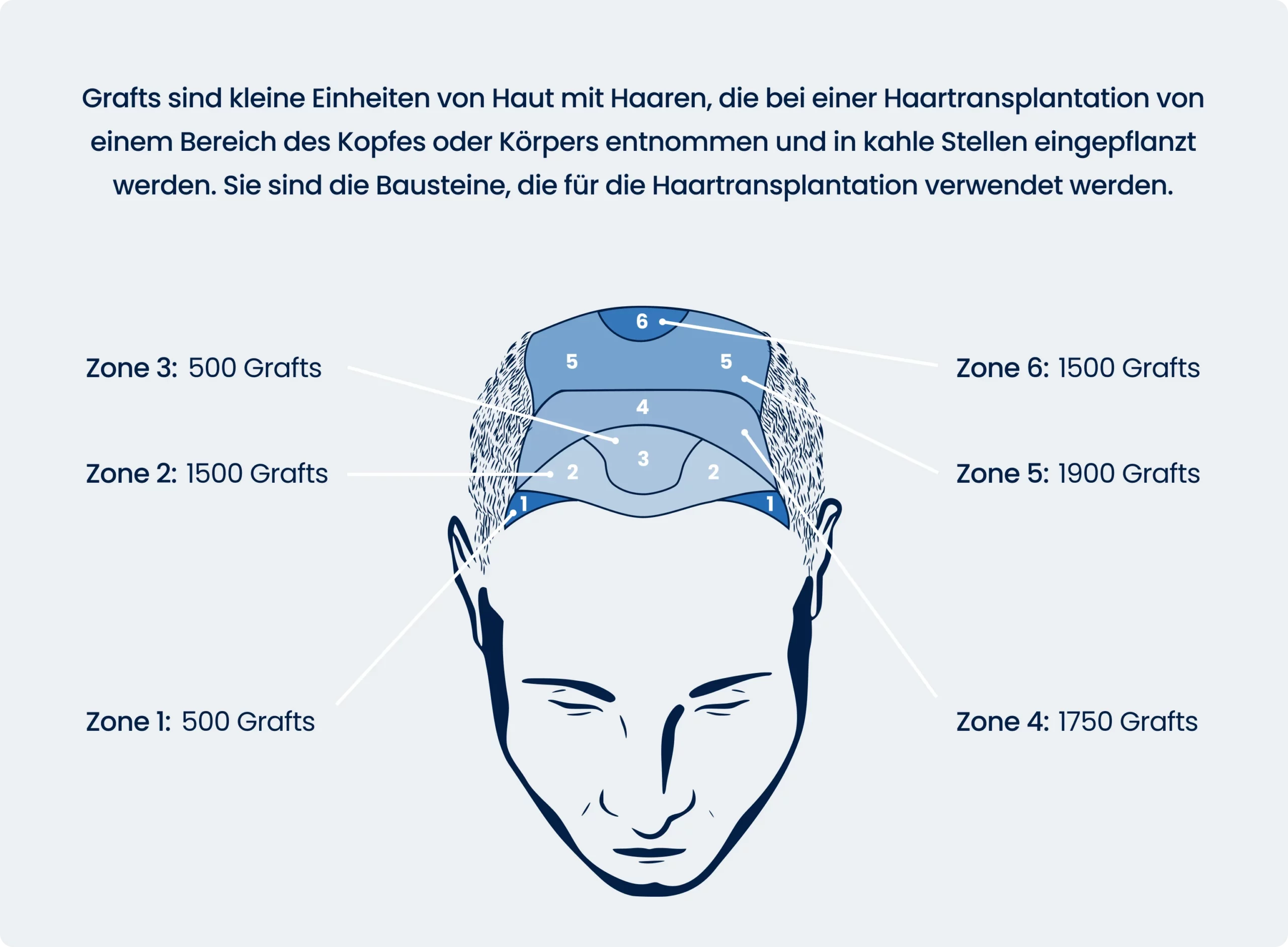
The cost of a hair transplant can vary greatly and depends on various factors. In particular, the number of grafts (hair follicles) to be transplanted is decisive.
The more grafts you need, the higher the total cost of the treatment will be. In addition, the cost may vary depending on the method chosen and the location of the clinic.
It is important to have a comprehensive consultation before deciding on a hair transplant. A detailed offer can then be obtained.
Bank of Hair offers a transparent cost breakdown and various financing options. This makes the treatment affordable for everyone.
Goodbye hair loss – Bank of Hair is the best choice for hair transplants
Hair loss is a complex issue. However, hair transplantation, especially by the experts at Bank of Hair, offers an effective and permanent solution.
Bank of Hair uses various methods to ensure that the best results are achieved for you.
Advantages of a hair transplant at Bank of Hair
✅ Long-term solution: Once transplanted, hair stays and grows naturally. ✅ Natural-looking results: Highly skilled surgeons ensure natural hair density and direction. ✅ High success rate: Our methods are based on the latest scientific findings and have been proven in practice. ✅ Fast results: After a successful hair transplant at Bank of Hair, hair usually grows back completely within a few months.
The cost of a hair transplant can vary. That’s why it’s good to know that Bank of Hair offers transparent pricing and financing options.
Secure a free consultation now free consultation. Machen Sie den ersten Schritt in ein Leben mit vollem, natürlichem Haar.
FAQ
There is no method that will stop hair loss immediately, but medication such as minoxidil can help to slow down hair loss. A permanent solution could be a hair transplant at Bank of Hair.
The causes of hair loss are varied and range from genetic factors to hormonal changes and stress. An accurate diagnosis is crucial for effective treatment.
If hair loss is caused by stress or poor nutrition, hair can sometimes grow back normally. However, a permanent solution is usually only possible with a hair transplant.
The most common causes of hair loss are genetic factors and hormonal changes. Male hormones, stress, nutritional deficiencies and medication in particular can trigger hair loss.
Scarring hair loss replaces hair follicles with scar tissue, causing the hair to fall out permanently and no longer grow back. This form of hair loss is usually irreversible and requires special treatments.
Free hair analysis
Click on the button and get your individual treatment price in only 2 minutes!
Stay up to date

The question of the best time for a hair transplant concerns many people who suffer from hair loss or thinning hair. With the right information and timing, you can not only improve the appearance of your hair, but also increase your self-esteem and quality of life. In
The question of the best time for a hair transplant concerns many people who suffer from hair loss or thinning hair. With the right information and timing, you can not only improve the appearance of your hair, but also increase your self-esteem and quality of life. In

The question of the best time for a hair transplant concerns many people who suffer from hair loss or thinning hair. With the right information and timing, you can not only improve the appearance of your hair, but also increase your self-esteem and quality of life. In
The question of the best time for a hair transplant concerns many people who suffer from hair loss or thinning hair. With the right information and timing, you can not only improve the appearance of your hair, but also increase your self-esteem and quality of life. In